
All it takes is some extreme guys online and a gaggle of the uber-rich to ruin basically anything. The list is way too long. We’d be here forever (OK, so just a few: concerts, chicken wings, entire neighborhoods, the literal economy, and democracy). But right now we’re specifically talking about disaster preparation. Something that’s sensible, prudent, and fairly simple has been hijacked by luxury doomsday bunkers in New Zealand, tactical everything, and a yearning for apocalyptic mayhem that seems quasi-sexual in nature.
You don’t have to be the stereotypical prepper to do your best to be ready in the event of disasters of different sizes—minor calamities all the way to mammoth catastrophes on a global scale. You can be the person who rides out a winter-storm power outage by pulling out a plastic bin labeled THE BAD PLACE from the closet. Inside there’s a case of water, two headlamps, a hand-crank radio, a power bank the size of a loaf of bread that can charge your phone while keeping the electric blanket going, and enough canned chili to keep you fed and entertained for a couple of days at least.
You’re maybe a little bored and bloated, but completely fine.
The time you spend over a couple of weekends getting ready for a situation just like this pays off. You’re a non-prepper prepper. You’re ready, but not in the flashy, annoying, or unnecessarily aggressive way that dominates “disaster preparation” searches on YouTube or Reddit.
And after all the danger passes and things go back to normal, you get to be a little bit smug about how much better you had it than your friends or coworkers.
That’s the ultimate payoff.
TL;DR
- What it is: Disaster preparation means getting ready for likely, survivable emergencies like storms, outages, wildfires, and floods. It is not about the end of civilization—but your preparation can scale to deal with disasters of different magnitudes.
- Where to start: Work through the basics in order: shelter, water, food, medical, power, communications, transportation, then money and documents.
- What to build first: A go-bag you can grab in a minute, then a two-week supply at home.
- Off-grid is optional: Borrowing a few off-grid tools helps, but you don’t need a far-off homestead, even as a city prepper.
- How to keep going: Start small this week, use free official sources, and add to it over time.
What is disaster preparedness? Less bunker, more boring
Disaster preparedness is the planning, supplies, and skills that get your household through an emergency and back on its feet afterward. FEMA’s version comes down to four pillars: make a plan, build a kit, stay informed, and get involved in your community. None of them mention a hatch in the backyard that leads to a billionaire-style underground panic room.
So what isn’t disaster preparedness? A personality, a political identity, or an excuse to buy anything with “tactical” printed on the box. TV made prepping look like an audition for a show about guys with 400 cans of beans and a whole lot of apocalypse cosplay gear. Most preparation for disasters looks more like regular adulting: water jugs in a closet, a plan for where to meet if phones go down, and copies of important documents stored somewhere safer than the junk drawer.
It also helps to know what you’re preparing for. Doomsday prep plans for permanent collapse.
Disaster prep plans for the things that happen constantly: hurricanes, wildfires, floods, multi-day outages, supply chain disruptions, and the occasional boil-water notice from a city that’s ignored its pipes since MTV played music videos. Prepping for disaster on the realistic end of the calamity spectrum also gets you most of the way toward the truly scary side—like global catastrophe or full-scale societal collapse—because two weeks of water and a way to get backup power helps in both cases.
The reward for this planning and prepping is disaster resilience, which is the ability to absorb a bad week without it turning into a hellacious month. Prepared households spend less time scrambling, less money panic-buying, and less energy spiraling. If you want the science-backed case for why any of this deserves to cut into precious binge-watching time, it’s laid out in another article: why disaster preparedness is important. If you’re already sold and just asking, “How do I prepare for a disaster without losing my mind?” keep reading.
Want some light reading on thriving during a little power grid oopsie or possibly surviving the apocalypse? The Non-Prepper’s Guide to Smart & Sane Disaster Preparation: Being Ready for the Bad, Terrible, and Literal Worst walks through every prepping category in order, with what to learn, what to buy, roughly what it costs, and what you can skip. Not sure what to do first? The book’s 30-day ramp-up plan takes you from zero to covered, one small step at a time.
How to start as a beginner prepper
Every prepper was once a beginning prepper, including the ones with 40,000 followers and very loud opinions about the miracle of paracord. Not knowing where to start is the most normal part of this whole non-prepper prepper thing.
Think of it like any DIY project. You can watch 14 hours of videos about tiling a backsplash, or you can pick a reasonable method and start laying down some mud. Being a DIY prepper works the same way. There are several respectable frameworks out there: the wilderness “rule of threes” (roughly three minutes without air, three hours without shelter in harsh weather, three days without water, and three weeks without food), FEMA’s four pillars, and the Red Cross’s plan-kit-informed model. They mostly agree with each other. Pick one and go.
We organize everything around a hierarchy of needs, starting with what’s absence would bring the most danger the fastest:
- Shelter: A safe place to ride it out, or a plan to leave if you can’t.
- Water: You can last about three days without it, and disasters are always messing with the tap.
- Food: Shelf-stable things you’ll actually eat. It’s less urgent than water, but hungry people make terrible decisions (if you tried intermittent fasting when it was THE thing, you know).
- Medical: First aid and a backup supply of the prescriptions you depend on. If this is your biggest risk, move it to the top.
- Power: Lights, a working fridge, phone charging, and anything that keeps medicine cold or key devices running.
- Communications: A way to get alerts and reach your people when cell service gets weird.
- Transportation: How you’ll travel, and a route to take, even if you don’t own a car.
- Money and documents: Cash, ID, insurance info, and copies of everything recovery will ask for.
Why this order? It’s triage. You’d trade your vinyl collection for clean water in about a day and a half, and you’d feel fine about it. Knowing how to be prepared for disaster mostly means knowing what to handle first and what can wait.
As for a beginner prepper list, start with what you already own. Camping gear, flashlights, a cooler, and the leftover water from that party you swore you’d never host again—it all counts. Put what you have in one bin so you know what’s already covered, then fill the gaps. That’s how to be prepared for natural disasters without a single shopping spree.
Disaster preparation vs. off-grid living (and what city preppers can borrow)
Off-grid living means running your home without public utilities: making your own power, sourcing your own water, and handling your own waste. Going off the grid is a lifestyle. Disaster preparation is a backup plan. One is moving to five acres in Montana with a composting toilet and sassy goats named after the Golden Girls and the actors from Three Men and a Baby—good luck keeping Blanche away from Selleck. The other version is making sure you can manage for two weeks when the grid takes an unscheduled vacation.
The overlap is useful, though. Plenty of off-grid tools do double duty. A portable power station keeps a fridge or CPAP running during an outage. A rain barrel waters tomatoes in July and flushes toilets during a boil-water advisory (check your state’s rainwater rules first). A camp stove works for a weekend outing with friends and a safe distance outside your backdoor when the electric range is dead.
Borrowing a few off-grid pieces is one of the best upgrades a regular household can make.
Going fully off-grid is a different commitment. No federal law bans it, but local building codes, zoning, and utility-connection rules decide what’s allowed. And some towns actually require homes to hook up to water and sewer. Add in permits and maintenance, and it’s a project for people with land, money, and a lot of free time.
City preppers are forced to play a different game. If you rent a fourth-floor, one-bedroom apartment, you’re not installing a whole-home generator or digging a well—that will piss off the people below you even more than that time you got drunk enough to think you could tap dance.
A city prepper has less storage, a landlord with opinions, and maybe no car. But you also usually have neighbors nearby, more stores, and faster emergency services. Smart city prepper moves include under-bed water storage, a battery power station instead of a gas generator (burning fuel to run your generator is never safe indoors or on a balcony), a go-bag light enough to carry on foot or transit, and a plan that assumes the elevator is out. How big a power station do you need? It depends on what you’re running, and The Non-Prepper’s Guide helps you do the wattage math. (We had to look it up, too.)
Rent? Live in a city? Don’t have a car? The Non-Prepper’s Guide to Smart & Sane Disaster Preparation has specific advice for renters, people without cars, parents, pet owners, and other households the standard checklists ignore, because nobody’s household looks like a Norman Rockwell painting.
Basic tips for disaster preparedness you can do without being a person your friends avoid at parties
The best tips for disaster preparedness are the boring ones you’ll follow. Here’s where to start:
- Ignore the stereotypes. You don’t need camo, a compound, or a year of freeze-dried tuna casserole. This guide to survival myths busts the most persistent ones.
- Prep for where you live. Learning how to prepare for natural disasters starts with knowing which ones are likely near you, like hurricanes on the Gulf, wildfire smoke out West, or ice storms that take down power lines. Your county or city emergency management office will have the local details.
- Make a disaster preparedness plan before buying gear. Decide who calls whom, where you meet, and who’s in charge of the pets. A disaster preparedness plan example can be this short: “If phones are down, we meet at the library on 5th Street. Aunt Dana in Ohio is our check-in contact. Dad grabs the go-bag. Sam grabs the cat.” That’s a plan. Want to see what a full version looks like? The book includes three sample household plans you can steal from.
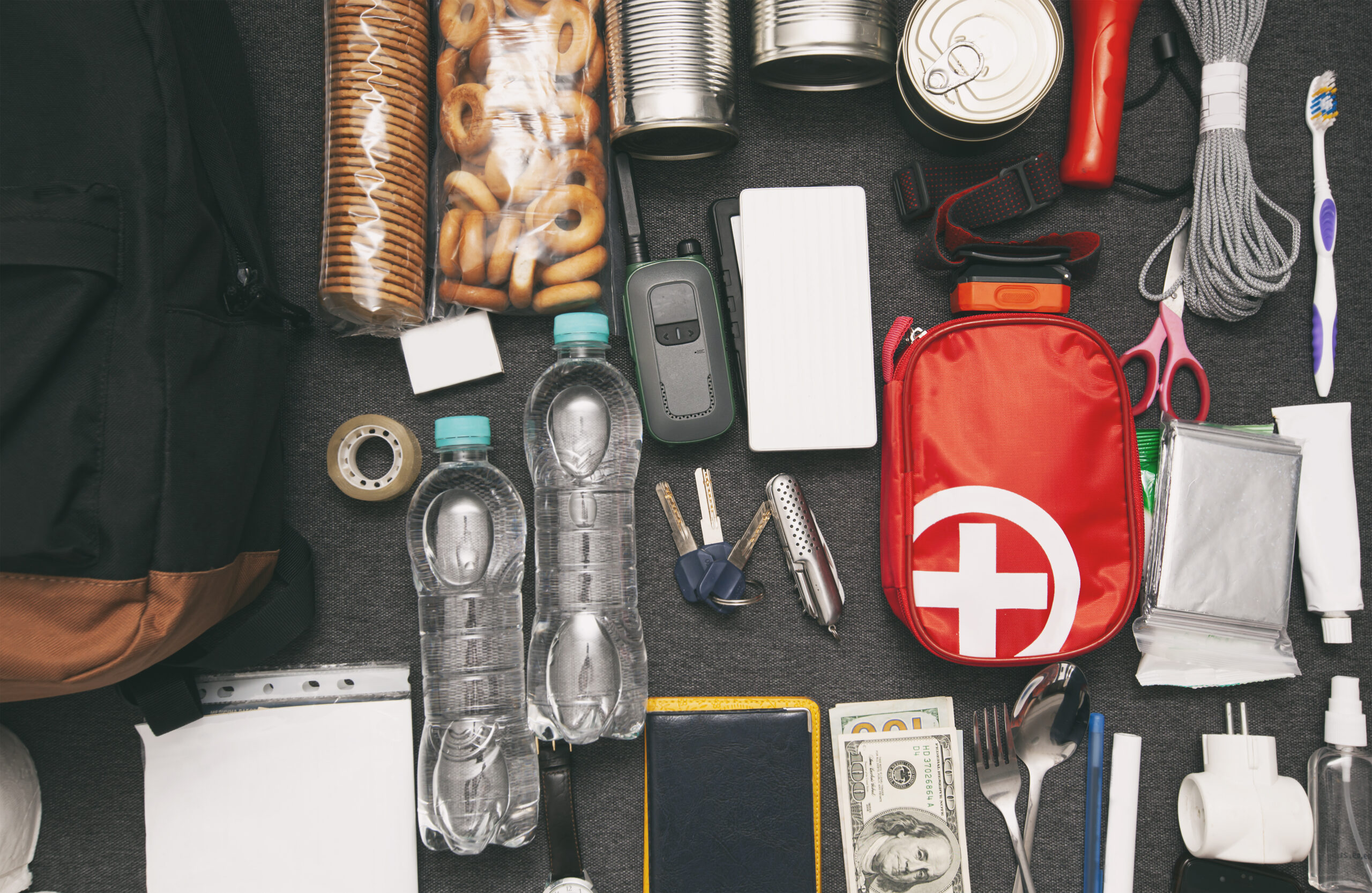
- Build a go-bag this week. Water, snacks, a first aid kit, a few days of medications, a flashlight, a phone charger, copies of IDs, some cash, and sturdy shoes. Start with what’s in your house.
- Know the two kinds of disaster preparedness kits. A go-bag is portable and covers the first few days if you have to leave. A home supply covers about two weeks if you stay. Quick math check: Ready.gov and the American Red Cross both use a guideline of a gallon of water per person per day, so two weeks is 14 gallons each, before the dog gets a drop. How do you store that much, keep it from going funky, and figure out the food side? That’s what the book’s water and food chapters are for. Pre-made kits are convenient, but many are padded with filler, so compare the contents to what you need before paying for one.
- Start small and build up. Add one item to each grocery run, like a case of water this week and canned green beans next week. A half-finished version of everything beats a perfect version of one thing.
- Get your info from quality sources. Ready.gov, the National Weather Service, the CDC, and your local emergency management office are free and reliable. Be suspicious of anyone whose fix for the end times is one expensive product and a discount code. Learning how to be prepared for disasters includes learning who’s trying to sell you fear.
Your home base for smart, sane disaster prep
Hold your applause for the massive humility we exercised by not putting ourselves on the quality sources list—because we’re about to do a little shameless self-promotion. The Non-Prepper’s Guide is the most comprehensive thing we have on the subject, but this page is also a convenient gateway for all of the Millennosphere disaster prep content right here on the website. We’ll keep adding guides on water, power, food, and the gear worth buying, and they’ll all link back here. Every one is researched and sourced, because the internet has enough confident guessing.
For now, here’s where to go next:
- – The importance of disaster preparedness: the science behind why prepping isn’t paranoid.
- – How to be a prepper without falling for survival myths: the stereotypes and bad advice to skip.
- – The Non-Prepper’s Guide to Smart & Sane Disaster Preparation: the full plan, category by category. Every chapter ends with a Skills & Stuff table showing what to learn, what to buy, rough costs, and what you can skip, plus a 30-day ramp-up plan, three sample household plans, and quick-reference checklists. All for less than two gallons of gas.
Start with one thing this week so you can be all smug with your canned chili and a battery to power your doomscrolling.
Answers to your questions about smart, sane disaster preparation
What is disaster preparedness? Disaster preparedness is the planning, supplies, and skills that help a household get through an emergency and recover afterward. In practice, that means a family plan, a go-bag, about two weeks of supplies at home, and reliable ways to get alerts.
How do I become a prepper? You become a prepper by taking the first step: making a simple household plan and building a basic go-bag. There’s no membership card. Most people who prep are normies just managing risk. You don’t have to panic-buy or do anything drastic—you can build up gradually on any budget.
What government resources are available for disaster preparedness? The main free resources are Ready.gov (FEMA’s preparedness site), the FEMA app, the National Weather Service and NOAA Weather Radio for forecasts and warnings, Wireless Emergency Alerts on your phone, the CDC for health guidance, and your state or county emergency management office. After a federally declared disaster, DisasterAssistance.gov is where you apply for federal help.
What is off-grid living? Off-grid living means running a home without public utilities, usually with solar or other self-generated power, a private water source like a well or rain catchment, and a septic or composting system for waste. It overlaps with disaster prep, but it’s a full-time lifestyle rather than a backup plan.
Is living off the grid illegal? Living off the grid isn’t illegal under federal law, but state and local rules decide what’s allowed. Building codes, zoning, permits, rainwater limits, and requirements to connect to water or sewer vary by place, so check with your county before you build.
What are the steps of disaster preparedness? The basic steps are to learn the risks where you live, make a household plan, pack a go-bag, build a home supply of about two weeks, set up alerts, and review it all once or twice a year. Emergency managers also describe a larger cycle of mitigation, preparedness, response, and recovery.
What are the pillars of preparedness? FEMA’s four pillars of preparedness are: make a plan, build a kit, stay informed, and get involved. Other organizations use different names for the same ideas, and most agree on the substance.
What are the most important survival items? The most important survival items are water and a way to purify more, shelf-stable food, a first aid kit and essential medications, a flashlight or headlamp, a battery or hand-crank radio, a phone charger or power bank, copies of IDs and documents, cash, weather-appropriate layers, and sturdy shoes. That list also covers the classic “10 items in a go-bag” question.
Disclaimer: This article is general information, not professional safety, legal, or medical advice. During an emergency, follow instructions from local officials, and call 911 if anyone is in immediate danger.
Sources & further reading
Preparedness basics
Off-grid living