
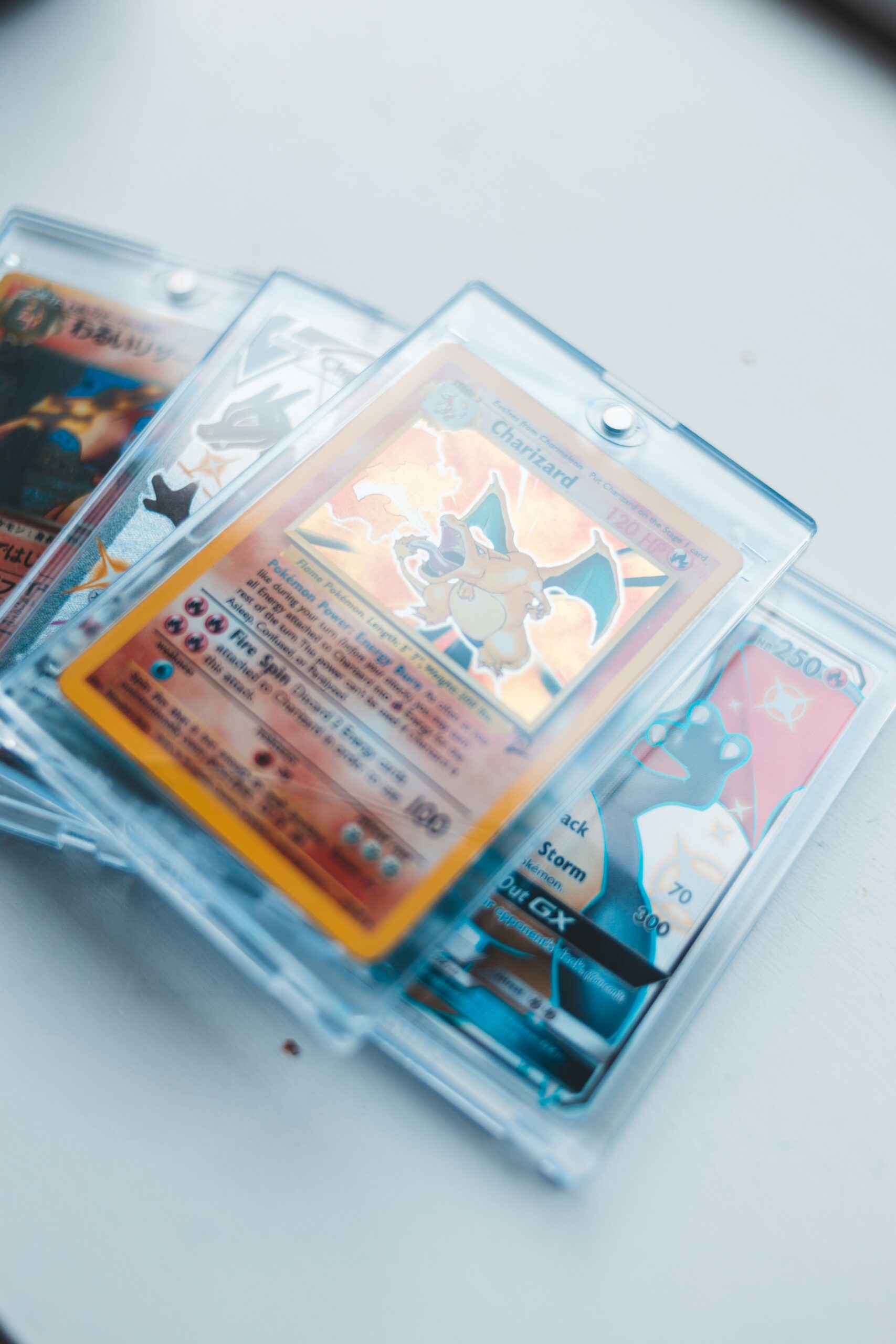
You’re sorting Charizard cards into plastic sleeves on a Tuesday night. You’re carefully alphabetizing, when somewhere around card 40 a small voice asks: is this deja vu? It’s not. You’re still collecting Pokémon cards at 40, and that’s not weird. It just feels joyful.
But another question tugs at you, too. Did I fail to grow up?
The simple answer is no. But you should stick around for the longer explanation and reassurance from data that proves collecting is popular—and growing more so every year.
TL;DR
Collecting Pokémon cards as an adult isn’t a fringe hobby. The trading card market is worth roughly $15 billion in 2026, and adult collectors with disposable income are driving that growth, not kids. Nostalgia is a real coping and connection tool, not arrested development. And you don’t owe your collection a business plan. Joy-first collecting is a completely legitimate way to do this.
You’re not alone in still collecting Pokémon cards (like, statistically speaking)
The trading card game market is worth roughly $15.1 billion in 2026. That’s a lot, right? But it’s on track to top $24 billion by 2031. Like most things in society, the money can’t be wrong. So collecting vintage cards is not a fringe hobby with a few thousand die-hards. It’s a real, big, and growing market with adult collectors driving it.
It makes sense when you think about who has money to spend. And it’s not kids with allowance money. Adults with disposable income and long-term passion for brands are more likely to pay up for premium products and graded singles.
With Pokémon specifically, if you grew up in the late ’90s or early 2000s, the original 151 Pokémon hold a specific kind of nostalgia. And that’s hitting hard right now. Since 2026 marks the franchise’s 30th anniversary, your focus on collecting Pokémon cards is very timely.
What’s happening psychologically isn’t arrested development
You need to reframe your collecting hobby from a refusal to grow up to a documented coping and identity mechanism.
Nostalgia functions as a coping strategy tied to stress resilience. Research on nostalgia consistently finds it works as a real stress buffer and connection booster. And collecting nostalgic objects—like cards or vintage toys—is one of the most direct ways adults tap into that feeling on purpose.
Collecting communities can also help boost social connection and stave off loneliness. Shows, forums, and trading circles build genuine social connection. This matters more now that the old “third spaces” have quietly disappeared from most people’s lives.
Like anything in life, collecting can tip into unhealthy territory at the extreme end. As long as you’re avoiding compulsive spending and opting for isolation instead of connection, collecting Pokémon cards as an adult can just be another hobby—like fantasy football or doomscrolling.
And you don’t need a business plan either
Enough of your life is tied to the acquisition of money to pay for trivialities like food, shelter, and every streaming service (somehow). You can say no to the “you should sell these” impulse that might be fed by the algorithm not-so-quietly suggesting a resale app. (In fact, you can punt the assumption that anything valuable has to become a side hustle right into the sun.)
There’s a real difference between joy-first collecting and investment-first flipping. It’s fine to know your cards have value without treating the binder as a portfolio. The collection doesn’t need to “make sense” financially to be worth keeping. Skipping monetization is not a failure of logic—that’s just what a hobby is.
Joy-first collecting looks like organizing by childhood memory instead of market value. Buying a card because you loved the art, not because it graded well. Not letting dollars justify what’s worth doing will help keep the joy in your collection.
If you want back into collecting Pokémon cards as an adult
If you haven’t touched a pack since you were a kid and you’re feeling the pull, start small. Sealed packs are as legitimate an entry point as chasing a specific graded single. And remember: there’s no correct way back in, and a $20 pack counts just as much as a big purchase.
Before diving in, here’s some quick context to orient you:
- • Vintage cards (1996–2003) are driven mostly by scarcity and nostalgia
- • Modern cards (2020 and later) are driven more by art and desirability
- • Beginner communities are easy to find, with r/PokemonTCG acting as a genuine crossover hub if you want people to talk to about it, not just a place to check prices
You don’t owe your childhood a return on investment
Keep sorting the binder. Keep buying the pack because you love the art. Keep doing something fun that brings you joy—and doesn’t hurt anybody. The only thing collecting Pokémon cards as an adult was ever supposed to do is make you happy. That’s the real measure of success that matters.
Quick answers to your joyful collecting questions
Is it weird for adults to collect toys or trading cards? No. The trading card market is worth roughly $15 billion in 2026, and adults with disposable income are the dominant force behind it, not a fringe minority. It’s a mainstream and growing hobby.
Why are adults collecting Pokémon cards? Nostalgia functions as a genuine coping mechanism tied to stress resilience, and research shows adults who maintain playful interests like collecting report better stress resilience and social connectivity than those who drop every childhood interest entirely.
Is collecting toys as an adult a sign of something psychologically wrong? Not for the vast majority of collectors. The hobby is linked to better stress resilience and social connection, not arrested development. Like any hobby, it can tip into unhealthy territory at the extreme end (compulsive spending, isolation), but that’s the exception, not the norm.
Do you have to monetize a collecting hobby? No. Knowing your collection has value doesn’t obligate you to treat it as an investment or a side business. Joy-first collecting, where the point is enjoyment rather than resale, is a completely legitimate approach.